

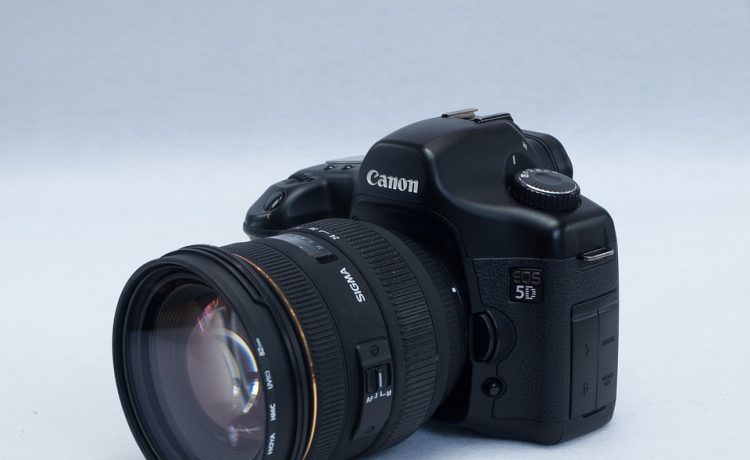
Photography enthusiasts and professionals alike often find themselves grappling with the challenges posed by low-light conditions. Whether you’re capturing candle-lit dinners, shadowy street scenes, or nighttime cityscapes, having a camera that performs well in dim light can make all the difference. The Canon EOS R, Canon’s first full-frame mirrorless camera, has garnered significant attention for its low-light capabilities. Let’s dive into its performance insights and discover how to master low-light photography with this remarkable camera.
1. High ISO Performance
One of the most critical factors in low-light photography is a camera’s ability to handle high ISO settings. The Canon EOS R boasts a native ISO range of 100-40,000, expandable to 50-102,400. This extensive range allows photographers to maintain image quality even in the darkest conditions.
With the EOS R, photographers can confidently push the ISO higher without facing excessive noise. Many users report that images shot at ISO 3200 and even 6400 retain a remarkable level of detail and color fidelity, making it easier to shoot in challenging lighting conditions without resorting to slow shutter speeds or wide apertures.
2. Image Stabilization
Low-light photography often necessitates longer exposure times, which can result in motion blur if the camera is not stabilized. While the EOS R doesn’t feature in-body image stabilization (IBIS), it offers extensive stabilization through compatible RF and EF lenses. For example, many RF lenses equipped with Optical Image Stabilization (OIS) can help negate the effects of camera shake.
This compatibility makes the EOS R a versatile tool in low-light scenarios, allowing for sharper images without the need for a tripod. Pairing the camera with a stabilized lens can lead to consistently sharp results, even in challenging conditions.
3. Dynamic Range
A camera’s dynamic range is crucial when shooting in low light, as it influences how well it can capture details in shadows and highlights. The Canon EOS R performs admirably in this regard, offering a dynamic range that allows for significant post-processing flexibility.
Photographers can recover details from shadows without introducing excessive noise, making it easier to balance exposure in post-editing. This capability is particularly useful in nighttime scenes where bright lights compete with deep shadows.
4. Autofocus Performance
Low-light conditions can often challenge a camera’s autofocus system. The Canon EOS R employs a Dual Pixel CMOS AF system with 5,655 selectable AF points, ensuring rapid and accurate focusing even in dim light. With conditions as low as -6 EV, it can focus effectively, making it suitable for a range of low-light scenarios.
The camera’s eye-detection AF further enhances portrait photography in poorly lit environments, allowing for sharp focus on your subject’s eyes, regardless of the ambient light conditions. This feature is invaluable when photographing people in evening gatherings or during twilight.
5. Choosing the Right Lens
While the Canon EOS R excels in low-light performance, the choice of lens can significantly impact your results. Fast lenses with larger apertures (f/1.2, f/1.4, or f/2.8) allow more light to hit the sensor, maintaining image quality even at higher ISO settings.
RF lenses like the RF 50mm f/1.2L and RF 85mm f/1.2L are fantastic companions for low-light shooting, providing vibrant colors and beautiful bokeh along with their fast maximum apertures.
6. Creative Techniques
Mastering low-light photography isn’t solely about equipment; it’s also about technique. Here are a few strategies to enhance your results with the Canon EOS R:
-
Use a Tripod: While the camera’s capabilities allow for handheld shots, using a tripod can open up lower shutter speeds without compromising sharpness, particularly useful for landscape photography.
-
Shoot in RAW: RAW files provide greater flexibility in post-processing, enabling better recovery of shadows and highlights without degrading image quality.
-
Experiment with Longer Exposures: Capture the blur of moving lights or create stunning light trails. Using long exposures can add an element of creativity to your low-light shots.
7. Conclusion
The Canon EOS R stands out as an exceptional tool for low-light photography, combining high ISO performance, excellent autofocus, and lens compatibility to create stunning images in challenging lighting conditions. By understanding the camera’s strengths and employing effective techniques, photographers can truly master low-light situations, capturing the beauty of the moment without compromising on quality. Whether you are venturing into nighttime urban landscapes or intimate gatherings, the EOS R is well-equipped to rise to the occasion.


